Running shorts usually suit warm long runs when airflow is the priority. Half tights are worth trying when thigh rubbing or bouncing pockets are the main problem. Full-length tights make more sense when you need additional coverage in cooler conditions. The right choice depends on how the garment behaves after repeated movement and sweating.
A pair that feels comfortable standing still can become distracting once the liner shifts, the waistband loosens or a phone pulls at one side.
For brands and clubs working with a running apparel manufacturer, these differences also help define what belongs in a long-distance collection.
Running Shorts vs Tights for Long Runs: Quick Comparison
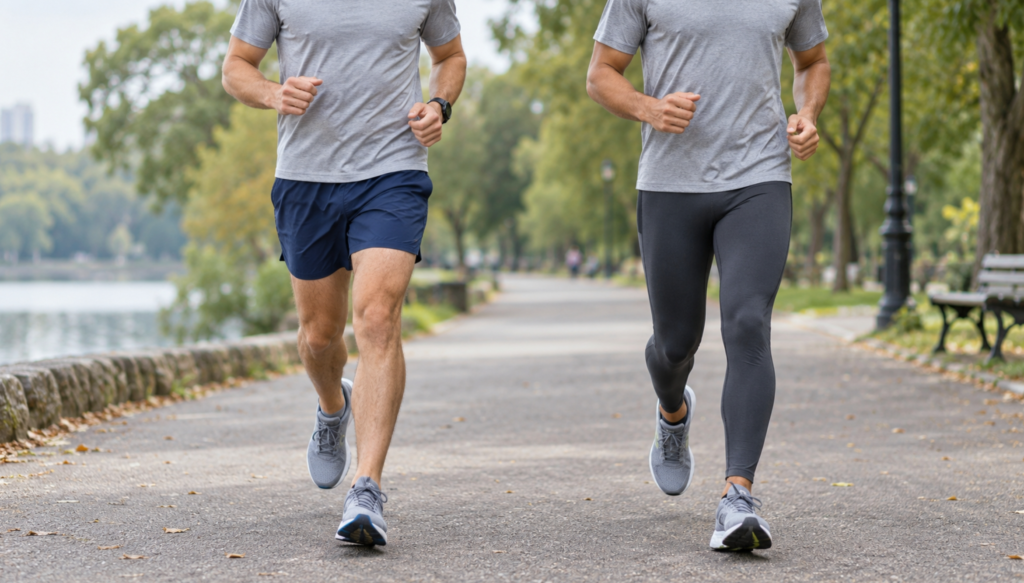
Here, “running shorts” means a loose outer short, with or without a liner. Half tights are fitted shorts that cover part of the thigh; full-length tights extend down the leg. Separating these styles makes the comparison more useful.
| Long-run priority | Loose running shorts | Half tights | Full-length tights |
|---|---|---|---|
| Warm-weather comfort | Open leg construction allows airflow | Less exposed thigh, but lower legs remain uncovered | More coverage; comfort depends heavily on fabric |
| Inner-thigh rubbing | Depends on liner coverage, hem movement and fit | Can separate rubbing skin if the hem stays in position | Can separate rubbing skin, but seams still matter |
| Phone and gel storage | Pockets may need extra support to limit movement | Close-fitting pockets can hold loads near the body | Similar benefit when pockets and waistband are well designed |
| Cooler conditions | Limited leg coverage | Partial coverage | More coverage; insulation depends on the material |
| Loose silhouette | Yes | No | No |
| Main issue to check | Liner movement and loaded-pocket bounce | Hem ride-up and waistband pressure | Warmth, knee restriction and slipping |
Use this as a shortlist, then test the actual garment. A well-designed loose short can work better than poorly fitting tights.
When Are Running Shorts the Better Choice?
Choose loose running shorts when you prefer an airy feel and do not need extra leg coverage. They are a practical starting point for warm road runs, especially if you carry most of your supplies in a belt or vest.
Look for a shell that clears your stride, a waistband that remains comfortable with your usual load, and a liner that suits your preferences. A side split can improve clearance, but the whole pattern matters.
Longer does not automatically mean less rubbing. A loose hem can still bunch between the thighs, while a shorter shell with a stable fitted liner may work well.
When developing custom lightweight running shorts, specify shell length and liner length separately. The outer silhouette determines appearance and clearance; the inner layer determines much of the skin-contact experience.
When Are Full-Length Running Tights Better?
Full-length tights are worth considering for cooler starts, routes with prolonged exposure, or runners who prefer continuous leg coverage. Choose the fabric for the expected conditions throughout the run, rather than judging only by how it feels before you leave.
Thin tights and brushed thermal tights serve different purposes. Extra coverage alone does not establish warmth, wind resistance or waterproof performance.
Fit through the knee, hip and crotch is particularly important. Tights should accommodate your stride without pulling the waistband downward or creating pressure behind the knee.
When reviewing samples from a running tights supplier, check several sizes in motion. A waistband that fits correctly in one sample size does not establish that the graded range will behave the same way.
Are Half Tights or 2-in-1 Shorts the Best Compromise?
Half tights are a useful option when you want thigh coverage without a full-length garment. Their close fit can also support pockets, provided the material and waistband can handle the intended load.
The key is where the leg opening sits. It should remain beyond the area that rubs, rather than riding upward into it. There is no single inseam that achieves this for every runner.
Two-in-one shorts combine a loose shell with a fitted inner short. They suit runners who like a loose appearance but want more coverage underneath. However, the extra layer adds material, and a poorly matched shell and liner can pull against each other.
For OEM 2-in-1 running shorts, approve both layers together. Check liner length, crotch shape, stretch and attachment points while running, not just during a standing fitting.
What Matters Most for Preventing Chafing?
The useful question is where the rubbing happens.
If the problem is skin rubbing against skin on the inner thigh, a fitted layer may help by separating those surfaces. If the irritation comes from a liner edge, seam or waistband, changing garment length may leave the problem unresolved.
Inspect the skin-contact side of the garment. Pay attention to:
- Inner-thigh seams and bulky seam intersections.
- Liner edges that tighten or shift during movement.
- Hems that roll, bunch or move into a rubbing area.
- Labels, drawcord ends and pocket openings against the skin.
Flat seams can be useful, but their position and finish still matter. A low-profile seam in the wrong place can remain uncomfortable.
Test the underwear or liner combination you actually intend to wear. An additional layer can introduce another edge or seam. If you use an anti-chafing product, follow its directions and include it in your practice-run setup.
How Do Fabric and Pocket Design Affect Long-Run Comfort?
Fabric: Review the Finished Construction
A loose short may use a lightweight woven shell, while half tights and full tights commonly use stretch knits. Polyester and nylon are common starting materials, but the fiber name alone does not tell you how the finished garment will feel.
Evaluate surface smoothness, stretch recovery, drying behavior and how the material feels when damp. A soft fabric that stretches easily may still lose support under a loaded pocket.
For running shorts fabric sourcing, assess the shell and liner as separate materials. Each has a different job, and both need to work in the final garment.
Pockets: Test With the Intended Contents
Put your usual phone, keys and gels into the sample. Run with them, then check whether the waistband shifts, the pocket sags or an opening rubs.
A close-fitting thigh pocket can keep an item near the body, but it still needs suitable dimensions and support. A zipped pocket secures the opening; it does not automatically prevent bounce.
For private label running tights, review label and logo placement alongside the pockets. Branding should work with the approved stretch and construction, especially around areas that repeatedly flex or contact the skin.
Do Compression Tights Improve Running Performance?
A fitted garment is not automatically a graduated compression garment. Close fit, perceived support and measured compression pressure are different things.
A 2025 systematic review and meta-analysis of compression garments identified 51 eligible studies involving 899 participants. Its pooled results found no statistically significant improvement in race time or time to exhaustion from wearing compression garments during running. The certainty of evidence was low to very low.
The practical implication is to choose tights for the fit, coverage and comfort you experience, rather than expecting a guaranteed improvement in endurance or race time.
For a brand, a comfortable fitted product can have value without making a performance claim that the evidence does not establish.
How Should You Test Shorts or Tights Before a Long Run?
Compare garments under similar conditions, with the same carrying setup where practical. Changing your shorts, underwear and running belt together makes it harder to identify what caused a problem.
Use this checklist:
- Check movement first. Walk, jog and lift your knees. Look for pulling, rolling hems or waistband movement.
- Load the pockets. Use the items you plan to carry and check access while moving.
- Progress to a familiar long run. Notice whether comfort changes as the garment becomes damp.
- Record the location of any problem. “Right liner edge” is more useful than “shorts were uncomfortable.”
- Wash and repeat. Follow the care label and check whether fit, seams and elastic recovery remain acceptable.
For brands, this wear review should inform sample approval before committing to bulk running shorts and tights. Define the review conditions and acceptance points with the production partner.
What Should Brands Specify for a Long-Distance Running Collection?
Build the product brief around the runner you intend to serve. A warm-weather road collection and a cooler-weather training collection may need different styles.
| Product brief | Details to confirm |
|---|---|
| Wearer and use | Target customer, usual run duration, climate and carrying setup |
| Fit and coverage | Rise, shell and liner lengths, leg opening and size range |
| Materials | Shell, liner or knit specifications; stretch and drying requirements |
| Storage | Phone dimensions, gel capacity, access and pocket support |
| Construction | Seam placement, waistband, drawcord and skin-contact details |
| Approval | Wear review, wash review and agreed production reference |
Retailers and distributors should compare these specifications across shortlisted products before placing a wholesale order. A shared size label or similar appearance does not establish equivalent fit or construction.
If you are comparing sportswear manufacturers in China, use this brief to keep supplier discussions consistent.
GOFITAPPAREL supports running apparel development through OEM, ODM and private label services, with options for shorts, fitted bottoms and tights. Share the intended wearer, climate, fit references and storage needs so the product can be developed around its actual use.
For your next collection, start with custom running apparel production and a clear long-run brief. For your next run, choose the garment that remains comfortable once you are moving, sweating and carrying your supplies.