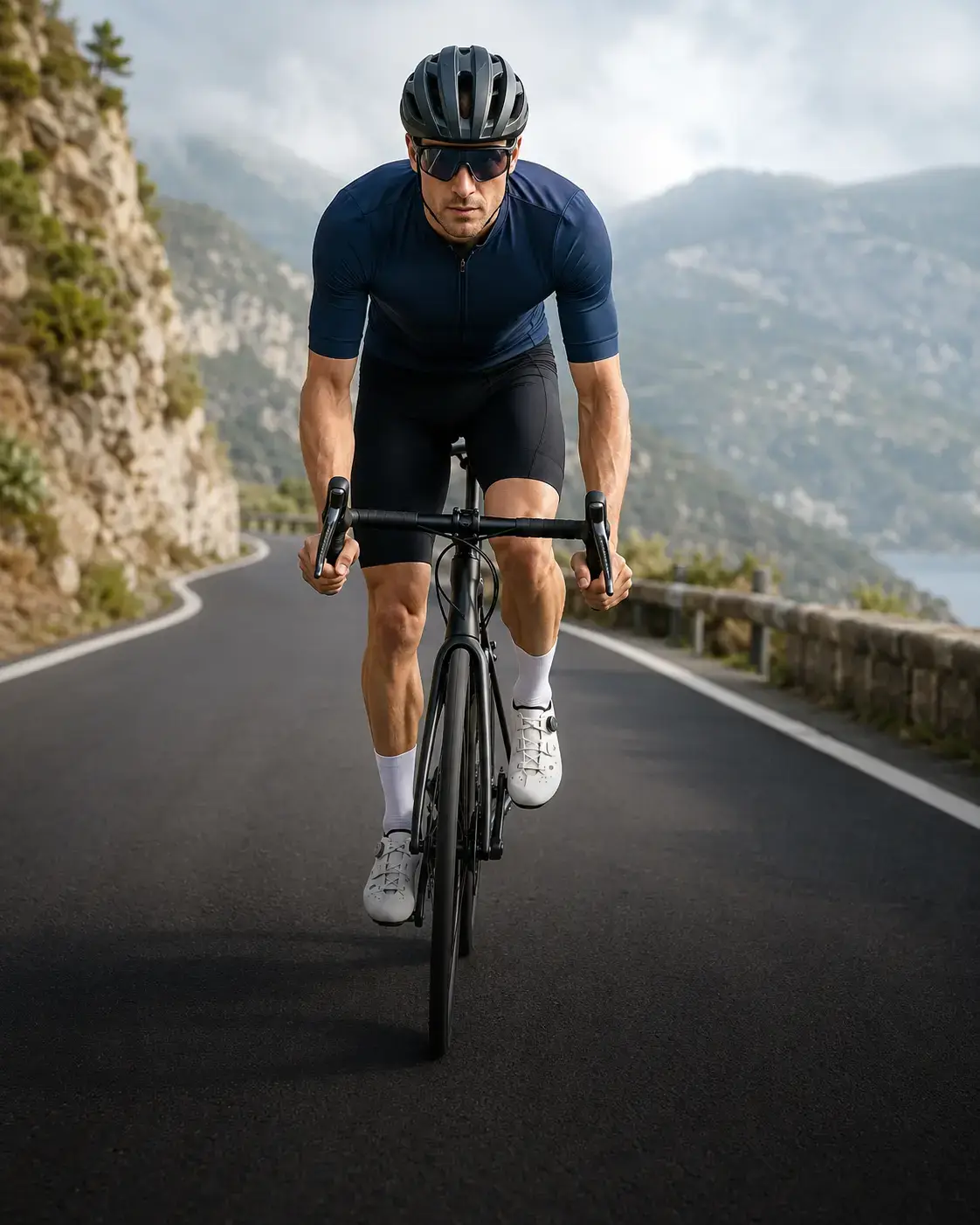
01 / ROAD
Road Cycling
Close fit, riding-position balance, rear storage and smooth layering.
On-Bike Fit & Chamois Development
Develop private label cycling kits around the riding position, discipline, ride duration, jersey architecture and bib-short system—not a standing fit alone.
Start With the Discipline
Torso angle, duration, surface and desired silhouette change the apparel specification.
Close fit, riding-position balance, rear storage and smooth layering.
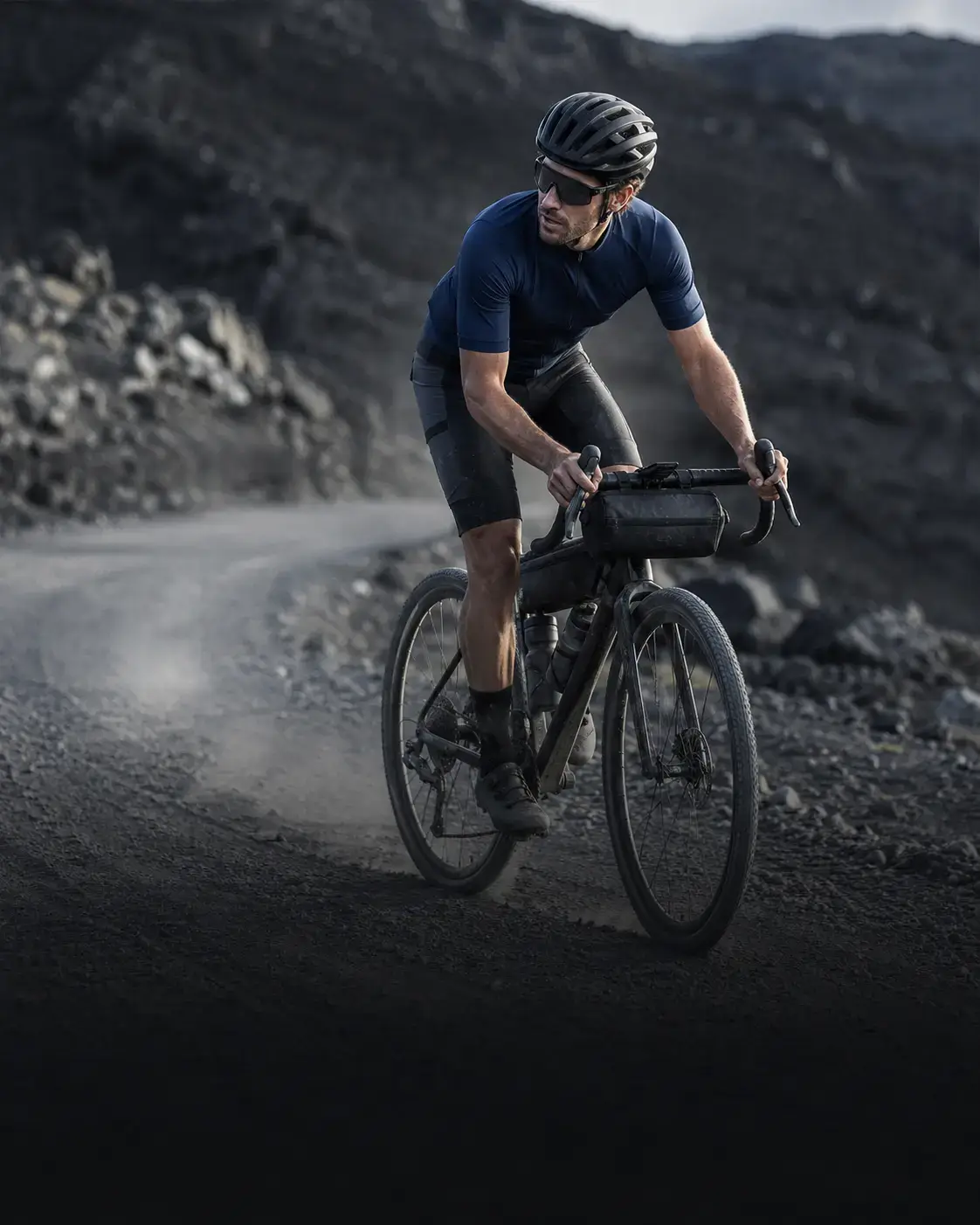
Long-duration utility, storage and surface-durability priorities.

High heat output, low bulk and studio-specific coverage.

Comfort, practical details and a less race-focused silhouette.
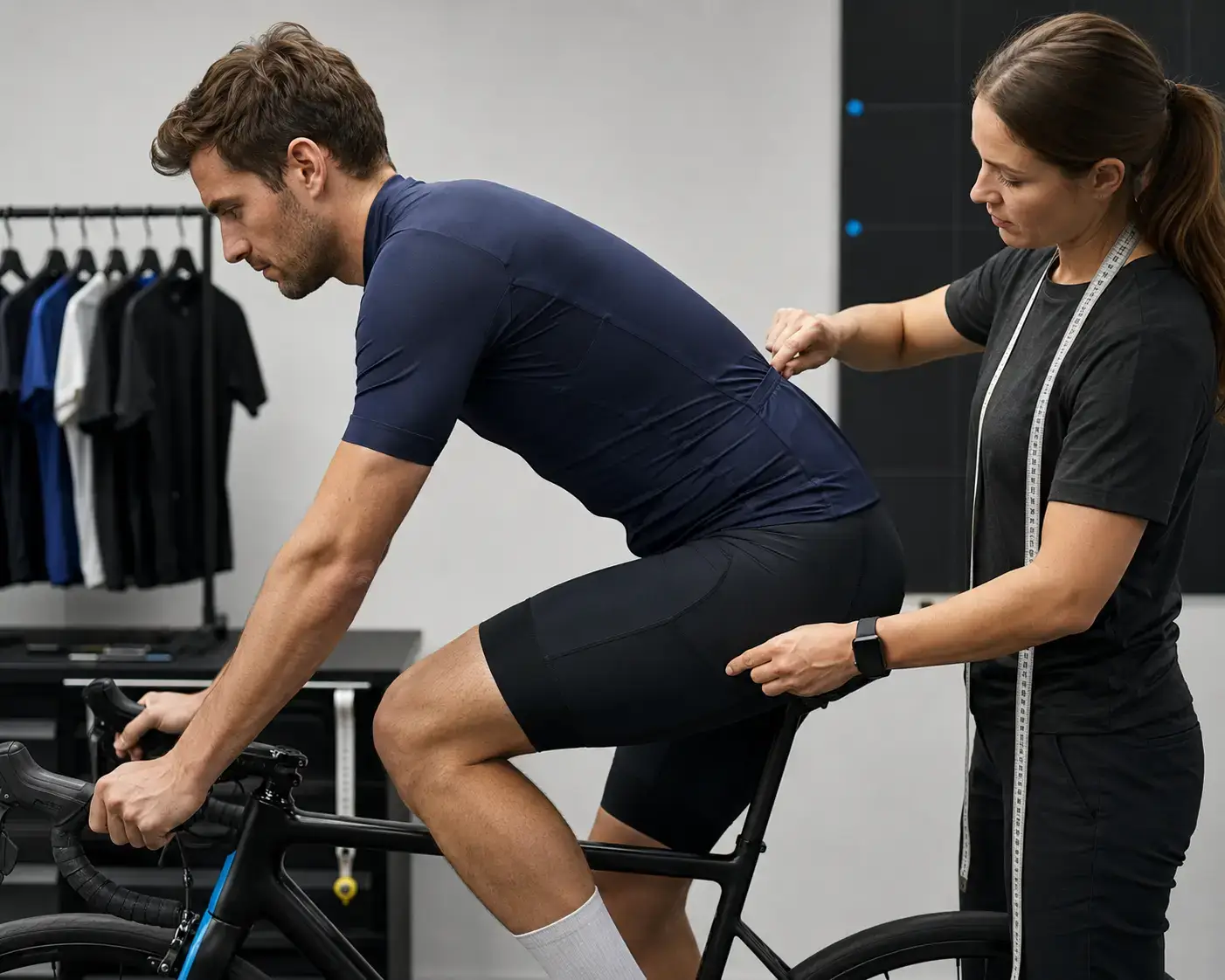 1 · SLEEVE ANGLE2 · FRONT LENGTH3 · BACK LENGTH4 · HIP FLEXION
Pattern for the Riding Position
A cycling garment should be reviewed in the posture and movement it is intended to serve.
Coordinate forward reach, shoulder rotation and sleeve orientation.
Reduce unwanted folding while maintaining zipper and hem function.
Balance rear coverage, pocket load and hem stability.
Assess torso-to-thigh angle, strap tension and chamois position.
Cycling Jersey Blueprint
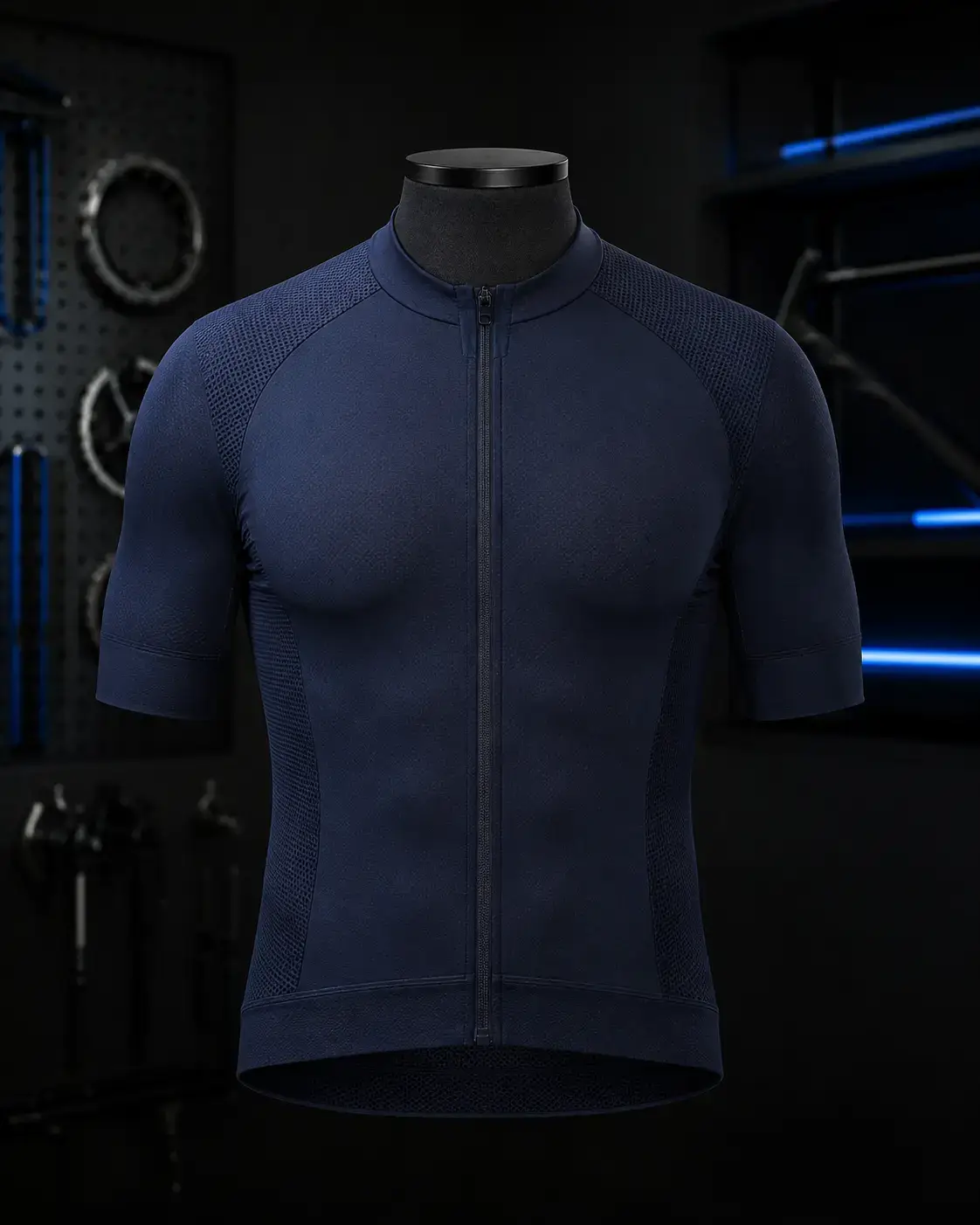
Designed around forward posture, closure and airflow.
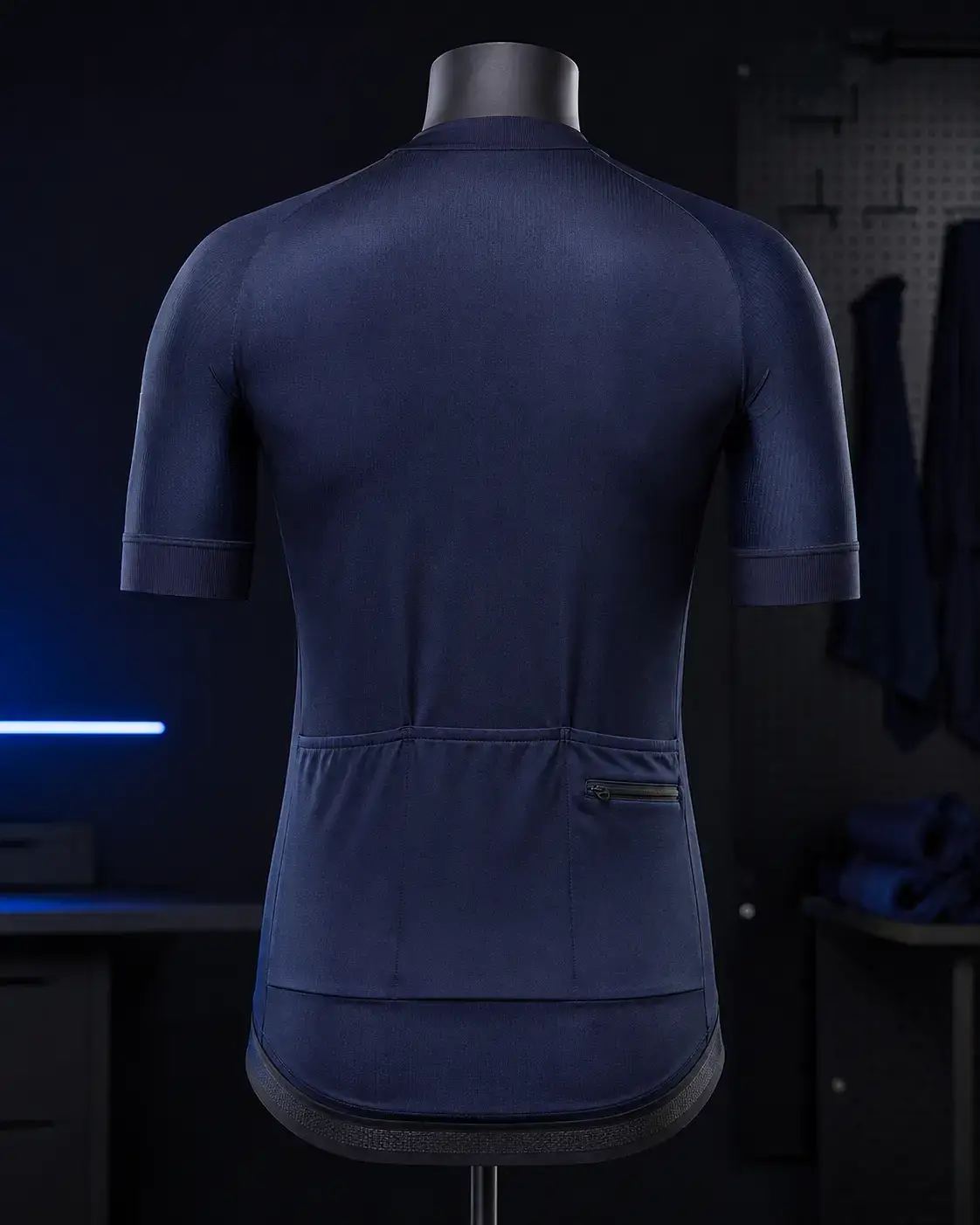
Designed around coverage, carrying load and stability.
Chamois Is a System Component
The pad, bib pattern, rider profile and riding position must be considered together.
Chamois Development
Profile, foam zones, density, coverage, size, placement and attachment all affect the finished bib short.
Road, gravel, indoor and everyday riding create different targets.
Pad dimensions and placement should coordinate with the intended user and grading.
Review pad location while seated and pedaling, not only when standing.
Inspect attachment, edge profile, smoothness and symmetry on the sample.
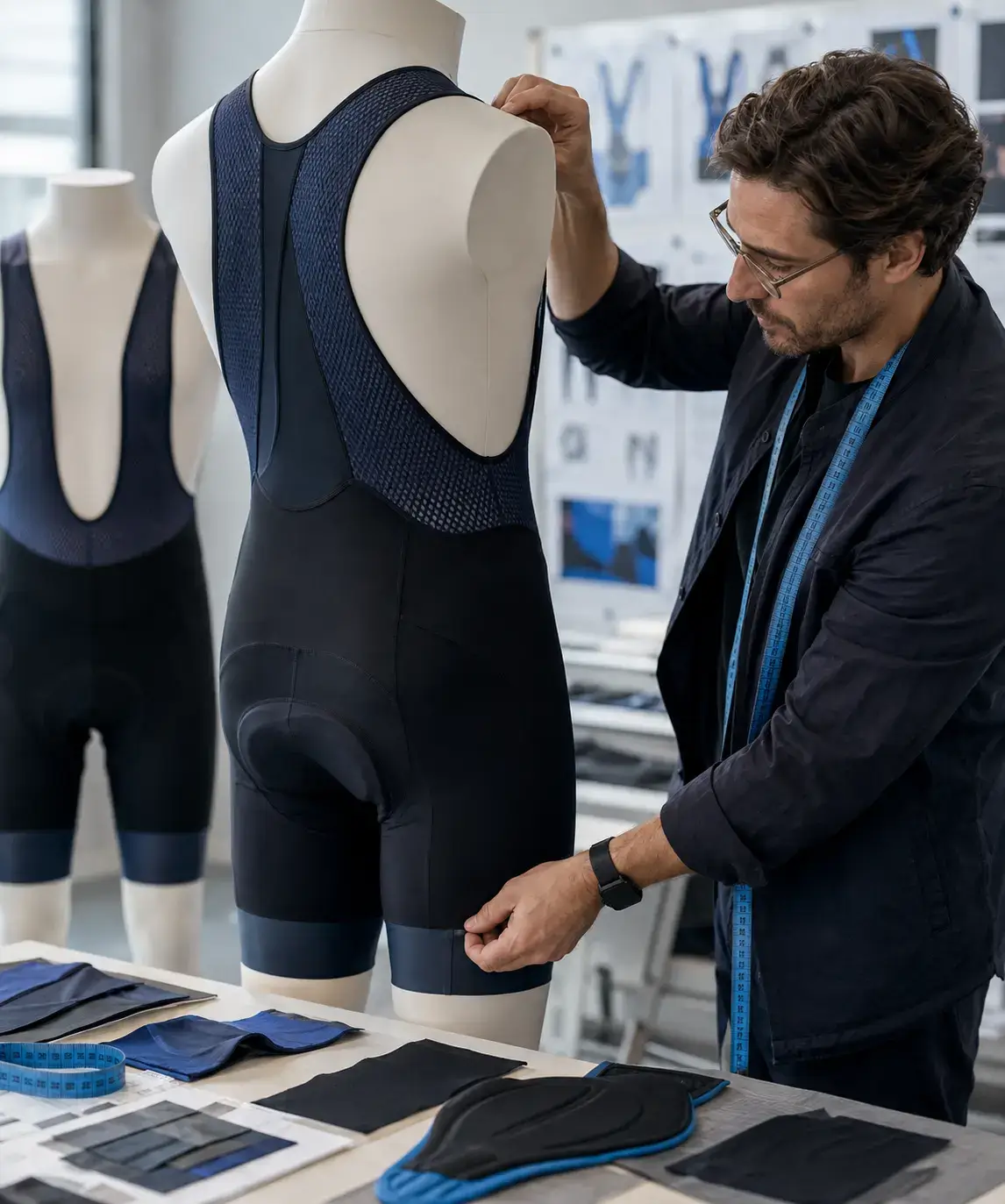
Beyond the Pad
Good chamois selection cannot compensate for incorrect strap length, rise, opening tension or panel balance.
Ride-Phase Kit Planning
This section stays cycling-specific: start temperature, sustained effort, exposed descent and post-ride use.
Cooler starts may call for removable arm, knee or vest layers.
PLAN: layer compatibilityJersey and bib work as the primary heat and movement system.
PLAN: airflow and close fitWind-facing phases may require a packable protective layer.
PLAN: wind front and pack sizeWarm-up and recovery pieces complete a broader cycling collection.
PLAN: easy layering and comfortCycling Sample Review
Review criteria should match the approved product, size, discipline and riding position.
Shoulder, sleeve and front-body balance.
Opening, capacity, sag and access.
Gripper tension and jersey movement.
Bib rise, straps, seams and opening.
Position, symmetry and edge profile.
Road, gravel, indoor or everyday.
Fit target, duration and rider.
Front, back, sleeve and pockets.
Straps, panels, gripper and pad.
Assess posture, load and pedaling.
Lock fit, grading and production data.
Prepare the Cycling Brief
Buyer Questions
Forward reach changes shoulder position, front-body length, back coverage, sleeve angle and pocket access. Standing fit alone may not show how the jersey behaves on the bike.
No. Thickness is only one variable. Profile, foam zones, density, coverage, placement, attachment, rider and ride duration all influence the approved bib-short system.
Yes. Three-pocket, zipped security and other rear-storage routes can be developed. Opening, access, capacity, reinforcement and loaded-pocket sag should be reviewed on the sample.
Bib shorts use shoulder straps and an upper structure instead of a conventional waistband. Each route has different pattern, fit, heat and entry considerations.
Suitable polyester panels can support sublimation routes, subject to the selected fabric and artwork. Panel seams, zipper alignment, stretch and color expectations should be reviewed during development.
Send the discipline, ride duration, product list, tech packs or references, rider profile, size range, fit target, fabrics, chamois, pockets, zippers, grippers, artwork, quantities, packaging and delivery date.
Share your product type, sport, target quantity and customization requirements. Our manufacturing team will review the project and recommend the next step.
Only your name and email are required. All other fields are optional.