Start by comparing 3-, 4- and 5-inch inseams, then choose the pair that gives you comfortable coverage while serving, lunging and carrying a spare ball. Use those lengths as fitting options: your preferred coverage, the garment’s cut and the length of any inner shorts should decide the final choice.
A pair can look right in the mirror and feel wrong as soon as you reach for a wide ball. The hem moves, a pocket pulls or the liner needs adjusting between points.
Fashion coverage of Wimbledon’s 2026 walk-on outfits has put tennis style in the spotlight again. For everyday players, that interest leads to a more practical question: how do you keep the silhouette you like while feeling comfortable through a match?
This guide explains how to compare women’s tennis shorts length, separate outer-shell and liner measurements, and check the fit in motion.
Women’s Tennis Shorts Length: 3-Inch vs. 4-Inch vs. 5-Inch
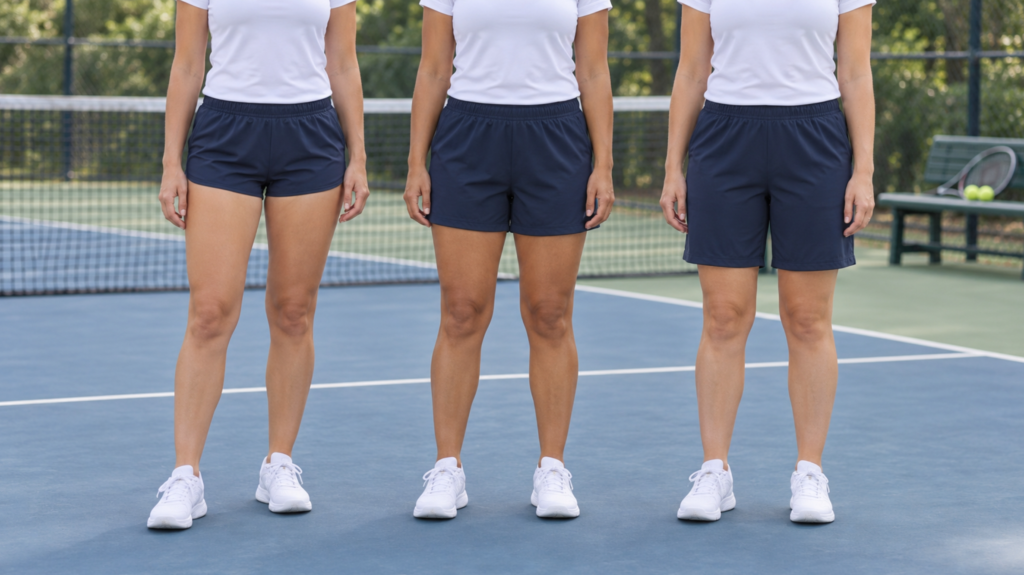
An inseam is the garment measurement along the inside leg, from the crotch seam to the hem. It is different from the outside length measured from the waistband.
For a useful comparison, check the same layer and sample size. A 3-inch outer shell and a 5-inch inner short perform different jobs.
| Inseam option | Approximate metric length | Why you might try it | What to check |
|---|---|---|---|
| 3 inches | 7.6 cm | You prefer a shorter silhouette or less fabric around the upper leg | Coverage during a wide lunge; liner length; access to ball storage |
| 4 inches | 10.2 cm | You want a comparison between a short cut and a longer option | Where the hem sits on your thigh and whether it stays comfortable |
| 5 inches | 12.7 cm | You prefer more leg coverage in a comparable cut | Freedom through the thigh and whether the leg opening catches during movement |
| Longer options | Depends on the selected style | You want additional coverage, particularly in a fitted short or liner | Movement, hem position and compatibility with any outer layer |
These are comparison options, not measurements that predict fit on every body. A roomy 3-inch shell and a fitted 3-inch short can feel quite different.
If you are developing a collection with a custom women’s tennis shorts manufacturer, approve the rise, hip room and leg opening alongside the inseam. Changing only the length will not establish the finished fit.
Outer Shorts vs. Inner Liners: Which Length Matters?
Both matter, but they need separate measurements.
The outer shell determines much of the visible silhouette. It may be loose, shaped at the sides or cut with a curved hem.
The inner short provides a closer-fitting layer and may carry ball pockets. Its hem can sit above, level with or below the outer shell, depending on the design.
A standalone ball short is another product again. Its fitted construction should be assessed as the garment you intend to wear, including whether you will put a skirt, dress or loose short over it.
Current products show why the construction needs attention. On’s Women’s 3-inch Court Shorts 2-in-1 include inner tights and mesh ball pockets. Original Penguin’s Women’s 3-inch Liner Tennis Short also specifies a built-in liner. The short length in a product name does not describe every dimension of the complete garment.
Before buying, establish:
- Whether the stated inseam refers to the outer short or inner layer.
- Which size was measured.
- Whether the size chart gives body measurements or finished garment measurements.
- Whether the liner is attached or separate.
- Whether a curved side hem changes the coverage you see from different angles.
For custom 2-in-1 tennis shorts, record outer and inner inseams separately in the specification. A single “short length” field leaves too much open to interpretation.
Why Do Tennis Shorts Ride Up During Play?
If the shorts keep moving upward, inspect the whole fit before buying the same style in a longer length. The following are fitting checks, rather than a diagnosis from the inseam alone.
Check Room Through the Hip and Thigh
Try a lateral lunge and return to your ready position. Watch whether the fabric stretches tightly across the hip, catches at the thigh or pulls the crotch upward.
If the waist fits but the thigh feels restricted, another size may change the waistband as well. A different cut may be worth trying.
For custom tennis shorts sizing, that is a reason to review hip, rise and leg-opening measurements together, rather than enlarging every dimension by the same amount.
Check the Liner Separately
When the outer shell looks fine but the inner hem needs constant adjustment, isolate the inner layer during your fit review.
Check its length, thigh opening, seams and position when a ball is stored. More liner length is one option to compare, especially if you want coverage over an area where your thighs touch. It still needs a comfortable opening and sufficient freedom to move.
Check What Happens at the Waist
A waistband that slips changes where the entire garment sits. One that rolls or feels uncomfortable can also lead you to keep repositioning the shorts.
A high-rise label describes waistband placement; it does not establish how much fabric will cover the inside leg.
Check Fabric Alongside the Pattern
Compare how the garment feels at rest and at full reach. Look for restricted areas, stretched seams and fabric that remains distorted after the movement.
In tennis shorts fabric sourcing, composition is only part of the brief. Buyers should also define the required stretch, recovery, weight, opacity and care performance, then assess the proposed fabric in the finished pattern.
How Ball Storage Changes the Fit
Try the shorts with a tennis ball before deciding the length works.
A pocket can feel comfortable when empty and become distracting when loaded. A ball held under a fitted hem also changes the shape and pressure around that part of the leg.
Nike’s current NikeCourt women’s ball shorts describe both side drop-in pockets and the option of tucking spare balls under the hem. These are useful examples of storage methods to compare; they do not mean every fitted short can hold a ball securely.
Test your preferred method with the number of balls you normally carry:
- Can you insert and remove a ball without pulling the waistband out of position?
- Does the loaded pocket pull the hem or outer shell?
- Does the ball stay secure through a split step and lateral movement?
- Can your hand reach the opening comfortably?
- Does the storage position remain comfortable during a serve?
A longer short is useful only if the pocket and opening still work for you. Extra length by itself does not establish secure ball storage.
When discussing a design with a tennis shorts supplier, specify pocket location, opening direction, intended ball capacity and the finished garment’s acceptance criteria. A phone-pocket illustration is not enough to approve tennis-ball use.
How to Check the Length Before You Buy
Measure a Pair You Already Like
Lay a comfortable pair flat without stretching it. Follow the inside-leg seam from the crotch seam to the hem, using the seller’s measurement diagram where available. If there is a gusset or an unusual seam layout, confirm the starting point.
For a lined pair, measure each layer separately. Note the size and rise, because inseam alone does not capture how the shorts sit on your body.
Body-measurement charts can use “inseam” for a different measurement, such as the inside leg toward the ankle. Check the chart’s instructions before comparing that number with a short garment.
Compare Coverage on Your Own Body
The same labeled inseam can land differently on people with different proportions. Height alone cannot select the best length.
Notice where the hem sits relative to the area you want covered. If thigh contact bothers you, compare a liner that covers that area through movement. If you prefer a looser leg, check the shell’s width and side shape alongside its length.
For a club collection, define the intended customer and size range before approving the sample. Private label women’s tennis shorts should use an agreed fit specification, with relevant sizes checked during development.
Use a Short Movement Check
Try the following sequence in a suitable space:
- Stand in your normal ready position.
- Take a controlled lateral lunge in each direction.
- Perform a few split steps.
- Reach overhead as you would when serving.
- Bend to pick up a ball, then repeat the movements with ball storage loaded.
Observe whether coverage remains acceptable and how often you need to adjust the garment. Also check any top, skirt or dress you plan to wear with it.
Repeat the movements enough to see whether the hems and waistband settle or keep shifting.
For brands, custom tennis shorts samples allow these checks before production approval. Evaluate the agreed garment after care as well, following its instructions, so that the initial fit is not your only reference.
Confirm Order Details for Teams
For bulk women’s tennis shorts orders, collect sizes after the team has reviewed the proposed fit. Record quantities by style, color and size, and ask how replacement pieces will be supplied.
A single untested medium sample should not stand in for every player’s fit.
About GOFITAPPAREL
GOFITAPPAREL is a China-based sportswear manufacturer offering tennis apparel development for brands, retailers, clubs and academies.
Its tennis range includes shorts, inner shorts, skirts, skorts and coordinated courtwear. A useful development brief identifies the wearer, intended coverage, outer and inner lengths, ball-storage method, fabric requirements and size range.
For OEM tennis shorts manufacturing, provide the tech pack or reference garment together with measurements and construction details. If the project begins with a concept, confirm the design and sampling work required.
Buyers considering a wholesale tennis apparel program should also establish the product assortment, quantity breakdown, branding and reorder plan. Minimums, pricing and timing need to be confirmed for the actual project.
Frequently Asked Questions
Are 3-Inch Tennis Shorts Too Short?
They may suit you if the cut and any liner provide the coverage you want during play. Try them through a lunge, serve and ball-storage check. Someone who prefers more coverage may be happier with a longer option.
Is a 5-Inch Inseam Better for Every Player?
No single length suits every player. A comparable 5-inch style provides more inside-leg length than a 3-inch one, but fit still depends on the rise, leg opening, fabric and construction.
Can the Inner Shorts Be Longer Than the Outer Shorts?
Some two-layer designs use a longer inner short. Check your event or club requirements if you plan to compete in them.
At Wimbledon, the exception allowing female players to wear solid mid- or dark-colored undershorts requires those undershorts to be no longer than the outer shorts or skirt. See Wimbledon’s official clothing and equipment rules. This is a tournament-specific requirement, rather than a general rule for all tennis shorts.
Do Women Have to Wear a Skirt Instead of Shorts at Wimbledon?
Women can wear suitable tennis shorts that meet the tournament’s clothing requirements. Our guide, Do Female Tennis Players Have to Wear Skirts at Wimbledon?, explains the garment choices and color rules in more detail.
Can Running Shorts Work for Tennis?
Assess the particular garment. Check lateral movement, coverage and whether you have a secure, accessible way to carry a spare ball. A running short with only a small key pocket may not meet your storage needs.
Conclusion
Start with 3-, 4- and 5-inch inseams as comparison options, then choose the length that feels comfortable through real tennis movements. Check outer and inner shorts separately, load the ball storage and look at the rise and leg opening as well as the hem. For brands and clubs, turn those decisions into a clear specification and approve the sample before ordering. The best length is one you can play in comfortably without repeated adjustment.