Lululemon uses an international production network. Vietnam, Cambodia, Sri Lanka, Indonesia and Bangladesh are the five countries named in its latest full-year product manufacturing disclosure. Its supplier list also includes apparel facilities in mainland China.
For a particular pair of leggings, training shirt or jacket, check the garment’s origin label. The brand’s Canadian roots, a store address and a shipping warehouse do not identify where every item was made.
For businesses assessing a private label activewear manufacturer, this distinction also helps separate brand location, material sourcing and garment production.
Which Countries Does Lululemon’s Latest Annual Report Identify?
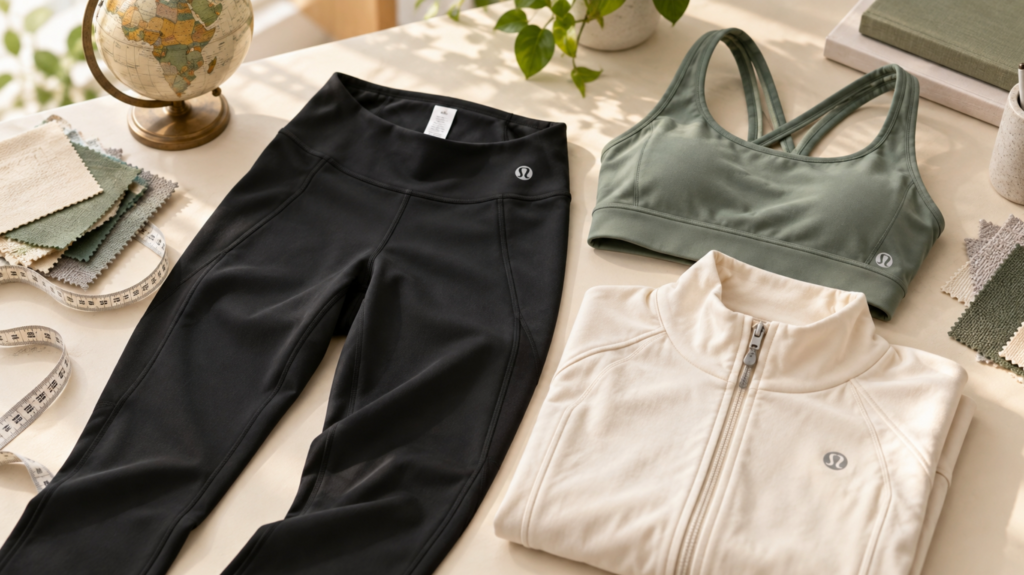
Lululemon’s FY2025 annual report on Form 10-K covers the financial year ended February 1, 2026. It reports the following manufacturing distribution:
| Country or region | Reported share of products manufactured |
|---|---|
| Vietnam | 40% |
| Cambodia | 18% |
| Sri Lanka | 11% |
| Indonesia | 11% |
| Bangladesh | 7% |
| Other regions | The remainder |
The report introduces its sourcing figures as vendor distribution based on cost. These figures cover products, rather than clothing alone, and should not be presented as a garment-count breakdown.
They also describe a reporting period. They do not establish the origin of a specific style, color or item offered for sale today.
Does Lululemon Own Its Clothing Factories?
The annual report states that Lululemon does not own or operate manufacturing facilities. It works with approximately 51 product manufacturing vendors.
That vendor count is not a count of individual factories. A manufacturing business can operate more than one facility, and a supply network can include different stages of production.
For example, sportswear fabric sourcing and garment assembly are related tasks, but they can take place at different locations. Printing and other finishing processes can add further steps.
For your own apparel project, ask which facility will perform each relevant stage and who controls the approved materials. The company you communicate with and the factory making the order may have different addresses.
Are Lululemon Clothes Made in China?
China is part of Lululemon’s disclosed apparel supply network.
The company’s supplier document headed “May 2026” lists Far Eastern Apparel (Suzhou) Co., Ltd. in mainland China as a Tier 1 apparel facility. This is evidence of an apparel manufacturing relationship, rather than simply a fabric supplier appearing in China.
It does not provide a China-only clothing production percentage or connect every listed facility to a specific retail style.
When researching activewear manufacturers in China, apply the same distinction. Verify garment-making capabilities and the intended production facility rather than relying on a company name or country label.
For an individual Lululemon item, its own label remains the more direct origin reference.
Are Lululemon Clothes Made in Canada?
Lululemon’s history begins in Vancouver, Canada, where it opened its first retail space in a yoga studio in 1998. That history explains the brand’s Canadian connection.
It does not establish Canadian production for every garment. The current sourcing disclosures describe a multinational network.
If Canadian manufacture is important to your purchase, verify the particular garment’s origin statement before buying. Do not apply information from one item to the entire range.
A supplier-list entry also needs to be read by activity. A facility categorized as a printer provides different evidence from a facility categorized as apparel. Neither a headquarters address nor a finishing location should be used to infer the origin of every finished garment.
How Can You Check Where a Specific Lululemon Garment Was Made?
Look for the country-of-origin statement on the internal labels or product information supplied with the item. Follow the information for the actual garment rather than another listing with a similar name.
A practical check is:
- Locate the origin information. Read the internal labels carefully and ask for clarification if the statement is missing or difficult to read.
- Identify the item. Record the product name and available style, size and color details.
- Ask about the unit being sold. A clear label photograph is useful when buying from a reseller.
- Separate manufacturing from dispatch. A parcel shipped from Canada or the United States may contain a garment made elsewhere.
- Contact Lululemon when uncertain. Provide photos and product information so the question concerns an identifiable item.
For second-hand clothing, an absent or worn label limits what can be established from photographs. A seller’s broad claim about the brand is less useful than information tied to the garment.
Likewise, “imported” does not name a particular manufacturing country.
Does the Production Country Tell You the Quality or Authenticity?
Country of origin answers a location question. It does not independently establish authenticity, fabric performance or workmanship.
An origin statement consistent with the disclosed supply network is useful context, but labels can be copied. Assess the seller, garment details and available purchase documentation together.
For quality, examine the product itself: fit, seams, fabric behavior, coverage and care performance. A manufacturing country is not a substitute for those checks.
Brands developing custom performance leggings should review movement, opacity, waistband stability and wash behavior on approved samples. Two garments made in the same country can have different materials, patterns and intended uses.
Keep the comparison tied to the product requirements rather than treating geography as a quality grade.
What Can Private Label Activewear Buyers Learn?
Define the Garment Before the Production Location
Specify the target wearer, activity, fit, materials and intended retail position. A studio legging, running tight and casual training bottom require different briefs.
For OEM yoga apparel development, supply the design files, tech pack or clearest references available. Agree which technical details still need development and who will approve them.
Identify Materials and Responsibilities
Ask who selects and purchases the fabric, who prepares the pattern and where cutting, sewing and finishing will take place.
For bulk leggings orders, compare quotations using the same product, fabric specification, size split, branding and delivery requirements. Confirm any material or color minimums separately.
Approve Samples Against Actual Use
Review custom activewear samples in motion and after the proposed care routine. Include the sizes and colors that matter to your intended market.
Keep the approved measurements, materials, construction and artwork together as the production reference. A fabric name or a good-looking sample photograph does not define the complete order.
How Can GOFITAPPAREL Support Your Own Activewear Collection?
GOFITAPPAREL is a China-based sportswear manufacturer supporting OEM, ODM and private label sportswear projects.
Its development services help buyers turn designs, references or a product concept into an agreed garment specification, with materials, fit, construction and branding reviewed for the project.
A useful inquiry includes the activity, product list, target customer, design information, size range, colors, quantity and delivery target. These details help establish a suitable production route and sample plan.
For a Lululemon purchase, check the specific item’s origin information. For an independent activewear range, evaluate the manufacturing partner through confirmed capabilities, clear specifications and approved samples.