Bocce, bowling and casual table tennis are useful starting points when you want a clear objective and a manageable first session. Badminton and pickleball suit beginners who want a social court game, while recreational running and cycling offer more control over pace.
The easiest sports to play for beginners depend on access, confidence and what you enjoy. A nearby club that welcomes new players may be a better choice than a supposedly simple sport with nowhere convenient to play.
This guide compares ten practical options and explains how to try each one. For clubs and retailers working with a sportswear supplier, it also highlights clothing requirements for beginner participation.
What Makes a Sport Easy for Beginners?
This is an editorial shortlist based on four entry requirements:
- An understandable objective: You can follow what you are trying to do.
- A manageable first skill: You can participate while still learning technique.
- A flexible starting pace: Practice can match the group’s ability.
- Accessible equipment and space: You can try the activity without building a large personal kit.
Easy to start does not mean effortless to master. Venue access also changes the answer: bowling needs a bowling center, table tennis needs a table, and cycling requires a bicycle and somewhere suitable to ride.
The numbers below organize the shortlist; your best starting option may appear anywhere on it.
1. Bocce
Bocce gives beginners a straightforward target: place their balls close to the smaller target ball, commonly called the pallino. You take turns, observe where the previous ball stopped, and adjust the next attempt.
It suits people who enjoy a social game with pauses between actions. A beginner session can focus on controlling distance before introducing tactical shots.
First session: Borrow a set, use a suitable playing area, and have an experienced player explain the local format. Start with gentle practice rolls and compare where they finish.
The main access question is the playing surface. Uneven ground can change how balls travel, so a familiar, reasonably consistent area makes learning easier.
2. Bowling
Ten-pin bowling has a visible objective: roll the ball down the lane and knock down the pins. A bowling center can make trying the sport convenient by providing a venue and, commonly, rental equipment.
Start with a ball you can handle comfortably. The initial goal is a controlled, repeatable delivery rather than a powerful throw or an advanced hook.
First session: Ask staff for help choosing a house ball and suitable footwear. Practice a simple approach and notice where the ball travels.
Bowling is useful for mixed-experience social groups because players take turns. The limitations are venue cost and availability, which make it less convenient as an everyday option for some beginners.
3. Table Tennis
Table tennis offers a compact playing area and an easy initial challenge: send the ball over the net and onto the other side of the table.
A cooperative rally gives new players something achievable to work toward. Learn the bounce pattern and controlled contact before making spin or fast attacks the focus.
First session: Use short, gentle exchanges with a partner. Once both players can return the ball, add basic serving and scoring.
It works well for indoor clubs, recreation centers and shared community spaces. Access to a table is the main requirement.
For groups ordering custom table tennis shirts, check sleeve clearance and comfort during repeated arm movement. A coordinated kit should remain easy to wear while players learn.
4. Badminton
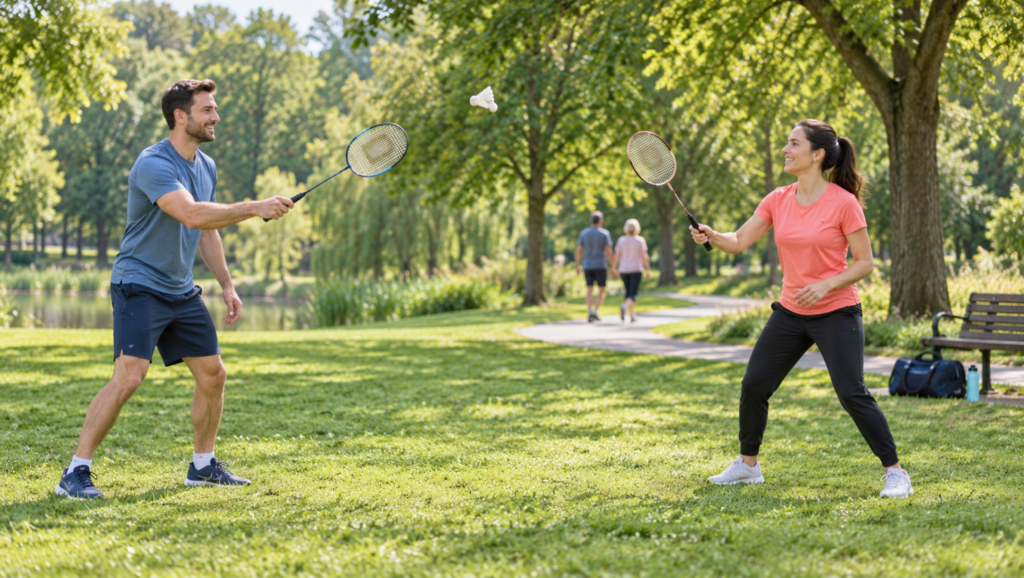
Badminton can be welcoming at a recreational pace. Players use rackets to send a shuttlecock over a net, and a beginner session can emphasize keeping an exchange going.
The technical challenge increases with faster rallies, movement and shot placement. Begin with controlled contact and basic serving, ideally with a coach or experienced partner.
First session: Join a beginner session or borrow equipment for gentle rallies on a suitable court. Indoor play avoids the wind affecting the shuttle.
Choose a group that matches your experience. A competitive club session may feel very different from a relaxed introduction.
For bulk badminton teamwear, prioritize shoulder movement, breathable construction and size availability across the group before finalizing decoration.
5. Pickleball
Pickleball is a paddle sport played with a perforated ball on a court. Its social doubles format can appeal to beginners who want to learn alongside other players.
There are still rules to understand, particularly the serve, bounce requirements and the non-volley zone. Learning those early makes the game less confusing.
First session: Attend an introduction, borrow a paddle where available, and practice controlled returns before playing a full game. USA Pickleball’s beginner skill guidance provides a useful starting point for learning the basics.
Court availability matters. Look for sessions that explicitly welcome beginners, and ask about footwear appropriate for the playing surface and sideways movement.
6. Disc Golf
Disc golf gives you a clear task: move a disc from the starting area toward a target, usually a basket, using as few throws as possible.
A beginner does not need a large collection of discs to try the game. A borrowed disc and a short, suitable course can provide a practical introduction.
First session: Ask a local player or course organizer which disc and holes suit beginners. Focus on controlled throws and a simple putting motion.
Check that the area ahead is clear before throwing, especially on shared courses. Walking between throws adds activity, but terrain and course length vary. A short, open layout will usually be easier to navigate than a long wooded course.
7. Darts
Darts is worth considering when you prefer a target game with relatively little continuous movement. The first task is to aim consistently and understand which section of the board you hit.
Begin with a simple target practice game rather than making complex finishing combinations your first challenge. Competitive scoring can follow once you know the board.
First session: Use a properly installed board and a clear throwing area. Take turns practicing a controlled release and aiming at selected sections.
Darts needs less playing space than a court sport, although the setup still requires suitable clearance. It offers a different kind of beginner experience from running or cycling, with more emphasis on accuracy than sustained activity.
8. Recreational Running
Running has a low equipment barrier and no opponent to keep up with. You can choose a familiar route and a pace that fits your current ability.
A beginner introduction can combine walking and running rather than treating uninterrupted distance as the first goal. A welcoming group can also help you settle into a routine.
First session: Choose a short, familiar route and an easy pace. Pay attention to how the route, footwear and clothing feel, rather than chasing a time.
For clubs planning a starter kit with a running apparel manufacturer, comfortable fit and practical storage are useful priorities. Beginners do not need a complicated clothing system to attend their first session.
9. Recreational Cycling
Cycling can offer a self-paced introduction for someone who already knows how to balance, brake and steer a bicycle. Riders who still need those skills should begin with instruction in a suitable setting.
A flat, quiet route makes the first outing easier to manage than busy roads or steep climbs. Check the bicycle’s fit and condition before heading out.
First session: Practice starting, stopping and turning, then try a short route that matches your confidence. Use appropriate protective equipment and follow local requirements.
Clubs developing custom cycling jerseys for new riders should check fit in the riding position. A jersey that feels comfortable standing may pull differently when the rider reaches for the handlebars.
10. Walking Football
Walking football adapts the familiar game around walking rather than running. It can appeal to beginners who want teamwork and ball skills at a more controlled pace.
Passing, positioning and communication still matter, and the activity can become demanding as play develops. Find a group that explains its rules and welcomes new participants.
First session: Join a beginner session, practice short passes, and ask the organizer to explain movement and contact rules before playing.
For community clubs, custom team training shorts should allow comfortable steps and turns. Select footwear for the actual surface and confirm the session’s requirements with the organizer.
Which Beginner Sport Fits Your Situation?
| Your priority | Options to try | Access question |
|---|---|---|
| A turn-based social game | Bocce, bowling or darts | Can you borrow equipment or reach a suitable venue? |
| Indoor play with a partner | Table tennis or badminton | Is there a table or court nearby? |
| A social court session | Pickleball | Does the session welcome complete beginners? |
| A self-paced outdoor activity | Running or cycling | Is the route appropriate for your current confidence? |
| Target play outdoors | Disc golf | Is there a short, beginner-friendly course? |
| Team participation | Walking football | Does the group offer an introductory session? |
Choose one or two options you can realistically repeat. Borrow equipment where possible, try a beginner session, and then decide whether you enjoy the activity enough to invest further.
What Should Beginner Clubs and Groups Wear?
Start with movement and fit. An indoor racket-sport group, a running club and a cycling group have different clothing requirements, even when all three serve beginners.
Before ordering, confirm the sport, age group, size range, venue, season and how often the kit will be worn. Try samples with participants rather than relying only on a size chart.
For private label sportswear, coordinate logos, garment labels and packaging after approving the product. Retailers and distributors should also consider whether the same basic pieces can support repeat orders as the beginner program grows.
GOFITAPPAREL supports custom sportswear development for clubs, brands and retail programs through OEM, ODM and private label services. Share the activity, target wearer and product list to define a suitable starting range.
The best beginner sport is one you can access, understand and enjoy enough to return to. Choose the session first; build your equipment and clothing around the activity you actually continue.