The best fabric for running clothes is usually a lightweight performance polyester for a running top, with a suitable stretch blend for fitted bottoms. Nylon is another useful option for shorts, tights and outer layers, while merino blends deserve consideration when temperature comfort and odor resistance matter.
The right choice depends on the garment and the run. A loose summer singlet, a supportive pair of tights and a rain jacket need different fabric constructions.
For brands planning OEM running apparel fabric development, start with those use cases. Define what the finished garment must do before deciding on a fiber blend.
Best Fabric for Running Clothes: Quick Comparison
| Fabric option | Practical starting point | What to check |
|---|---|---|
| Performance polyester | Running T-shirts, singlets and lightweight layers | Moisture handling, drying behavior and comfort |
| Performance nylon | Running shorts, pants and lightweight outer layers | Weight, durability and the specific construction |
| Polyester-elastane or nylon-elastane | Fitted tops, running tights and close-fitting shorts | Stretch, recovery, coverage and movement |
| Merino wool blends | Running base layers and tops when odor resistance matters | Fabric weight, skin comfort and care |
| Cotton or cotton-rich blends | Short easy sessions or casual clothing; engineered options may suit more demanding use | Wet comfort and measured drying performance |
These are material directions rather than universal rankings. Two fabrics with the same fiber percentages can have different weights, structures, finishes and wearing characteristics.
What Should Running Fabrics Do?
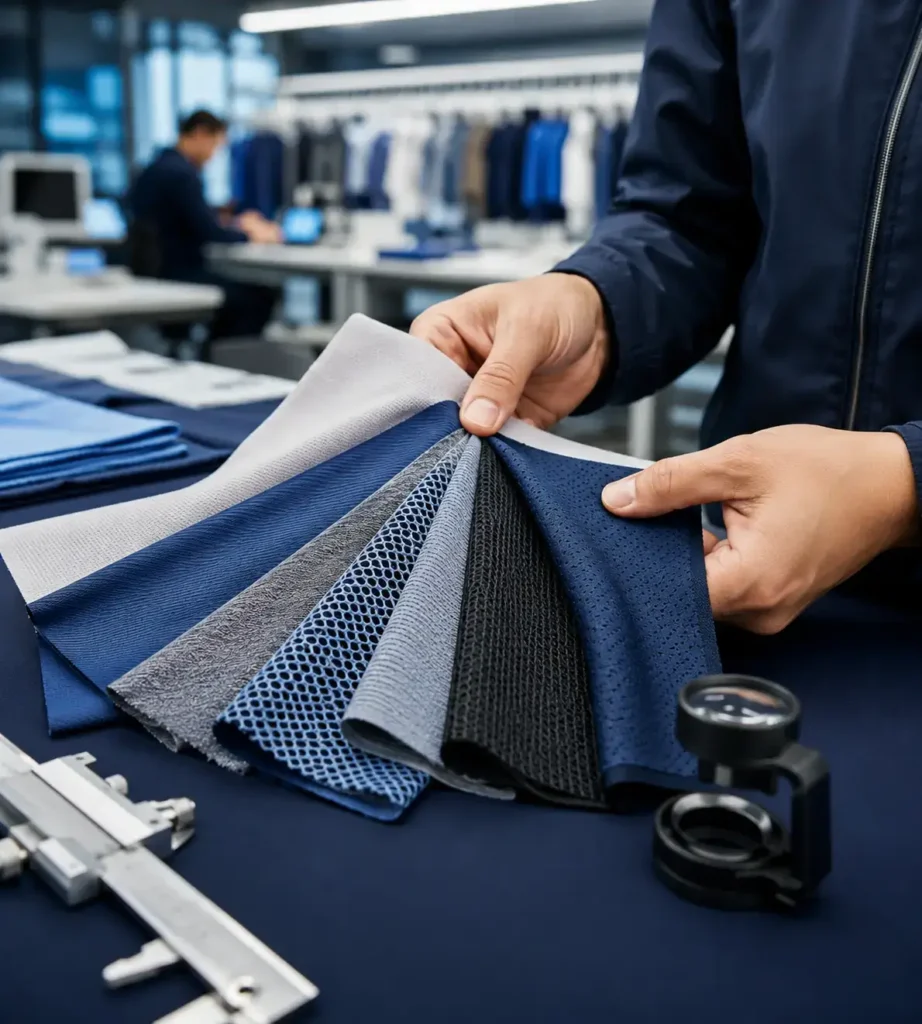
A running fabric needs to manage the conditions created by movement: perspiration, repeated stretching and contact with skin, seams or equipment.
Moisture handling: Wicking describes liquid moving through a fabric, while drying describes moisture leaving it. Patagonia’s moisture-wicking guide explains how construction and treatments can help move and spread sweat. A fiber name alone does not prove that a garment handles moisture well.
Freedom of movement: A loose singlet may need little added stretch. A fitted tight needs enough stretch for the stride and enough recovery to retain its shape.
Comfort during repeated motion: Check the finished garment where fabric touches the underarms, inner thighs, waistband or running pack. Evaluate the seams along with the material.
Durability: Consider how the fabric behaves after wearing and washing. A comfortable first fitting is useful, but repeated use matters for the finished product.
The best fabric for running clothes balances these needs for the intended garment. Adding every possible feature can increase complexity without improving the runner’s experience.
Which Fabric Works Best for Each Running Garment?
Running T-Shirts and Singlets
Lightweight performance polyester is a practical place to begin for an everyday running top. Choose the fabric construction and fit according to the expected temperature and intensity.
Compare smooth knits with more open structures rather than assuming all polyester tops feel the same. Check the material in the finished garment, including any print or branding that covers part of the surface.
For businesses developing custom polyester fabrics for running tops, include the intended fit, fabric feel and moisture-management requirements in the brief. Review a sample in movement and after laundering before approving the material.
Running Shorts and Tights
For a loose short, a light woven polyester or nylon can be a useful direction. For a fitted tight, polyester-elastane and nylon-elastane blends offer a starting point when stretch and recovery are priorities.
Elastane, also called spandex, contributes stretch and recovery. Its percentage alone does not specify how supportive, opaque or comfortable a finished garment will be.
When comparing custom stretch fabrics for running tights, check the sample through a full stride and other movements relevant to the wearer. Examine coverage under stretch, waistband stability and how a loaded pocket affects the fit.
A short’s outer fabric and liner may also need separate specifications. Choose each for its role in the garment.
Running Jackets and Weather Layers
A running jacket needs a different fabric brief from a next-to-skin top. Wind protection, ventilation, packability and rain protection should be considered alongside fit.
For custom shell fabrics for running outerwear, specify the whole garment system. A water-repellent surface finish does not, by itself, make a jacket waterproof. Fabric barriers, seams and openings all affect the result.
Choose the protection level for the conditions you expect, then confirm the performance with the appropriate material and garment checks.
How to Choose Running Fabrics for the Weather
Hot or Humid Runs
Start with a light garment that allows comfortable movement and ventilation. Compare how the fabric feels once damp, and consider whether the cut lets excess heat escape.
Drying behavior depends on the conditions as well as the material. Use comparable samples when testing, and avoid treating a “quick-dry” label as a guarantee that a shirt will feel dry throughout every run.
Cool or Cold Runs
Consider a performance synthetic base layer or a suitable merino blend, then add layers according to the conditions and your exertion.
Smartwool’s merino wool guide describes merino’s temperature-management and odor-resistant properties. Fabric weight, construction and the rest of the outfit still matter when choosing a running layer.
Try the planned layers together. Check that the outer piece fits comfortably over the base layer and allows enough movement for the stride and arm swing.
Long Runs and Runs With a Pack
The best fabric for running clothes should also be assessed over the intended duration. A short indoor fitting cannot show every comfort issue that appears during a longer run.
Wear the sample with the shorts, tights, vest or pack you expect to use. Check repeated contact at the shoulders, waistband and other friction points, and note how the garment feels as it becomes damp.
Is Cotton Suitable for Running?
Cotton can be comfortable for a short easy session, but ordinary cotton’s absorbency can make it a less useful starting point for prolonged, sweaty running. A saturated garment may remain damp longer than the runner prefers.
Engineered cotton and cotton blends should be evaluated separately. Cotton Incorporated’s TransDRY technology is one example of a cotton fabric route developed to improve moisture management and drying.
If you prefer cotton’s feel, compare the actual product’s wet comfort and drying behavior. Avoid judging every cotton-containing garment as though it were an untreated cotton T-shirt.
For a demanding running collection, select the fabric on verified performance and wearer feedback.
How to Evaluate Running Fabrics Before Bulk Production
For brands, selecting the best fabric for running clothes requires both a material specification and a finished-garment review.
When discussing custom running fabric sourcing for bulk production, agree on the fabric reference and the acceptance criteria before approving a larger order.
Include these details in the specification:
- Fiber composition and fabric construction.
- Fabric weight, usually recorded in grams per square meter.
- Stretch direction, stretch level and recovery requirements.
- Color reference and coverage at the intended stretch.
- Moisture-management, drying and durability requirements relevant to the product.
- Care instructions and the condition of samples before testing.
AATCC’s published test-method catalogue separates liquid moisture management, wicking and drying tests. For example, TM195 addresses liquid moisture management, while TM201 measures drying rate using a heated plate. Ask the laboratory which method fits your claim and how the results should be interpreted.
Compare fabrics under the same protocol and conditions. Record any laundering before testing, especially when you need a performance finish to withstand repeated use.
Then review the finished garment. Check fit, seam placement, pockets and decoration as well as the base fabric. Retain the approved reference so production inspections have something specific to compare against.
GOFITAPPAREL: Developing Running Apparel From a Fabric Brief
GOFITAPPAREL supports running apparel development and production from Guangdong, China. Its fabric-selection process can consider composition, construction, weight, stretch, color and the performance requirements of the project.
For private label running apparel with custom fabrics, begin with the target runner and product mix. State whether the collection needs lightweight tops, loose shorts, fitted tights or weather layers.
Confirm fabric availability, development quantities and the testing plan during quotation. Review the selected material on a garment sample before approving bulk production.
If you are comparing production partners, our guide to sportswear manufacturers in China can help you build a broader shortlist.
Frequently Asked Questions
What is the best fabric for running clothes in summer?
A lightweight performance polyester top is a practical starting point. Compare ventilation, fit and wet comfort in the actual garment.
Is polyester or nylon better for running?
Both can be useful. Performance polyester is a common direction for tops, while nylon also works in shorts, pants and lightweight jackets. Choose the specific fabric for the garment’s role.
How much elastane should running tights contain?
There is no single ideal percentage for every design. Evaluate the required stretch, recovery, coverage and finished fit rather than choosing by composition alone.
Is merino wool only for winter running?
No. Lightweight merino blends can also be considered in milder conditions. Check the weight, construction and your comfort during the intended run.
Should brands specify an exact fabric weight?
Yes, include it in the approved specification. Select the target through sample evaluation rather than applying one universal weight to every running garment.