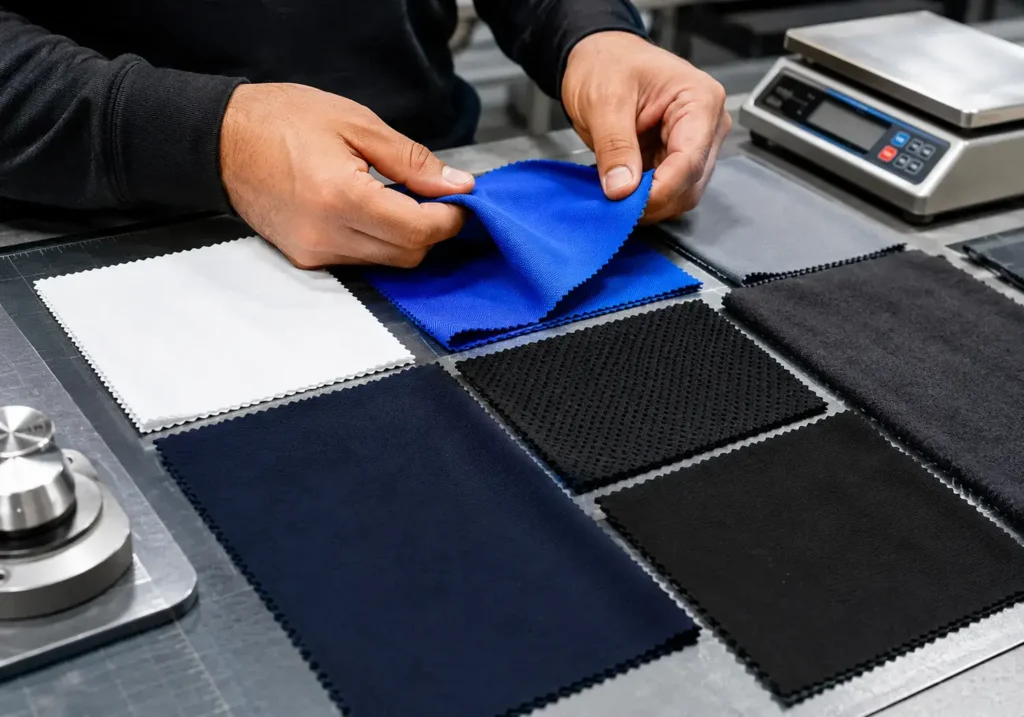
The best fabric for sportswear depends on the activity and garment. For most sweaty workouts, lightweight polyester is a practical starting point. Polyester-elastane blends are useful when the garment also needs stretch. Nylon-elastane is another option for fitted activewear, while merino wool and cotton suit different priorities.
The best choice comes down to the garment, the activity and how the finished fabric behaves. “100% polyester” tells you the fiber content; it does not tell you how breathable, stretchy or comfortable a shirt will be.
For OEM sportswear fabric sourcing, turn those requirements into a written material brief before confirming the blend.
Sportswear Fabrics at a Glance
| Fabric option | A useful starting point for | What to check |
|---|---|---|
| Polyester or polyester-elastane | Training tops, jerseys and other sweaty-workout clothing | Moisture management, airflow and fabric weight |
| Nylon-elastane | Leggings, fitted tops and sports bras | Hand feel, coverage and stretch recovery |
| Elastane added to a blend | Garments needing stretch and shape retention | Actual stretch, recovery and fit |
| Merino wool or merino blends | Base layers and activities where temperature and odor management matter | Garment weight, comfort and care |
| Cotton or cotton blends | Light activity, casual gym clothing and warm-up pieces | Damp feel, drying and shrinkage |
Use this table to shortlist the best fabric for sportswear in your range. Construction, finishing and fit can change how any of these materials performs.
Polyester: A Strong Starting Point for Sweaty Training
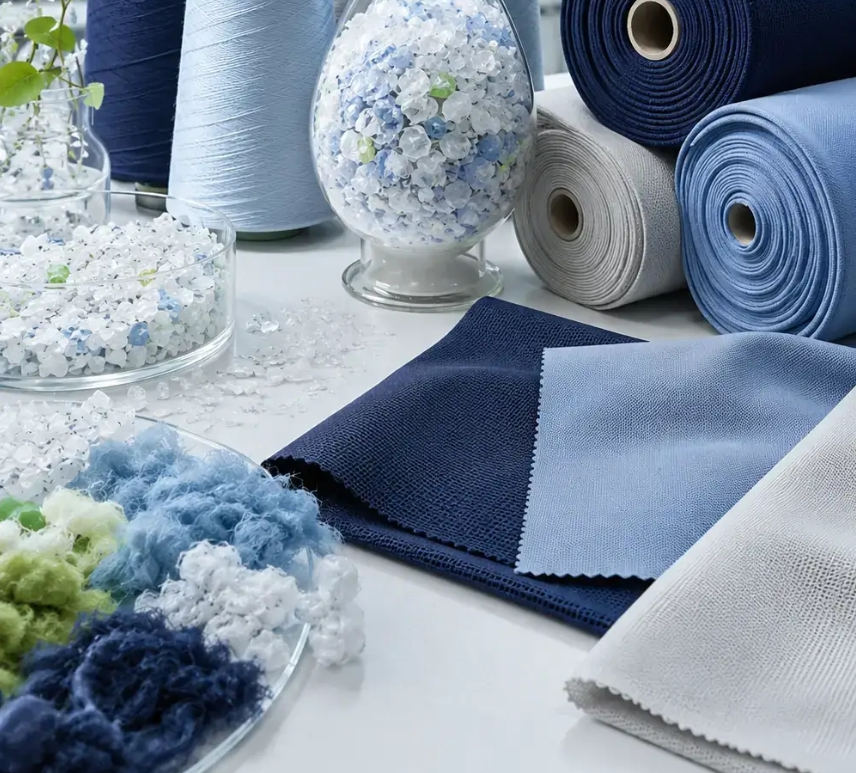
Polyester is widely used in performance clothing because it can be made into lightweight, quick-drying fabrics. If those are your priorities, it is a useful starting point when choosing the best fabric for sportswear.
The important part is how the fabric handles moisture. Wicking moves sweat through or across a textile; quick drying describes how readily that moisture evaporates. A polyester label alone does not prove either performance.
Nike’s guide to moisture-wicking fabric explains why polyester features in its performance apparel and how engineered fabrics move sweat away from the skin.
When specifying custom polyester fabrics for sports tops, confirm the decoration method early. Standard dye sublimation generally calls for white or light-colored polyester-rich fabric. Other prints and logos need their own compatibility checks.
Nylon: A Useful Option for Fitted Activewear
Nylon-elastane fabrics are worth comparing for leggings, fitted tops and sports bras. Depending on the yarn and finish, they can offer a smooth feel with stretch that suits close-fitting garments.
That does not make nylon automatically softer, more breathable or better than polyester. Compare actual swatches in the weight and construction you need.
When comparing custom nylon-elastane fabrics for leggings, check coverage while the fabric is stretched, then review how it returns to shape. A fabric that feels good as a loose swatch may look or feel different once made into a fitted garment.
Elastane: Stretch Is Only Part of the Story
Elastane and spandex are two names for the same type of stretch fiber. LYCRA is a brand of elastane, rather than a separate generic material. As the LYCRA fiber guide explains, it is combined with other fibers to help fabrics stretch and retain their shape.
Its percentage is useful information, but it is not a compression rating. The knit, fabric weight, garment measurements and pattern also affect how tight a finished piece feels.
When choosing the best fabric for sportswear with a close fit, compare both stretch and recovery. More stretch is not necessarily better if the garment loses its shape after wear. For a loose training tee, a comfortable cut may matter more than a high elastane content.
Merino Wool and Cotton: Useful for Different Reasons
Merino wool deserves consideration for base layers and outdoor activities where temperature and odor management matter. Smartwool’s merino wool guide describes those properties and explains why the fiber is used across different climates.
Choose the garment weight for the conditions. A light merino layer and a thick wool top serve different purposes, even though both carry the same fiber name. Check the care instructions before buying or specifying either.
Cotton can be comfortable for light activity, casual gym clothing and warm-up pieces. Untreated cotton readily absorbs moisture and can stay damp during a sweaty workout, making it less appealing when quick drying is the priority.
Cotton blends and performance finishes can change that behavior. Judge the finished fabric rather than ruling out every cotton-containing garment from its label.
How to Choose the Best Fabric for Sportswear
A collection rarely needs one fabric for everything. Give each product a clear job:
- T-shirts and jerseys: Prioritize moisture handling, comfort and enough airflow for the intended activity.
- Leggings and fitted shorts: Check coverage, stretch recovery, waistband behavior and comfort through movement.
- Sports bras: Review the fabric together with the support structure, straps and band. Fiber content alone cannot determine support.
- Training shorts: Compare woven and knitted options around movement, liner compatibility and pocket stability.
- Warm-up layers: Choose the weight and warmth around when the garment will be worn.
Mesh describes a fabric structure, not a fiber. It can be made from polyester, nylon or other materials, and the openness of the structure influences airflow.
Give your sportswear fabric supplier the product, activity, desired fit and target cost. That is a more useful brief than simply asking for “the best fabric for sportswear.”
What to Check Before Bulk Production
Approve a garment sample as well as a fabric swatch. Review:
- Composition and weight: Record the blend and GSM, meaning grams per square meter.
- Stretch and recovery: Assess the fabric in the directions the garment needs to move.
- Coverage: Check the intended color while the garment is stretched and worn.
- Moisture claims: Ask what testing supports terms such as “moisture-wicking” or “quick-drying.”
- Washing and decoration: Review changes in fit, appearance and logo condition after washing according to the intended care instructions.
During sportswear fabric sourcing for bulk orders, retain the approved fabric specification and swatch alongside the garment sample. Use these references to compare production batches and reorders against the agreed requirements.
If you’re still building a supplier shortlist, our guide to sportswear manufacturers in China explains which manufacturing capabilities and order terms to compare.